

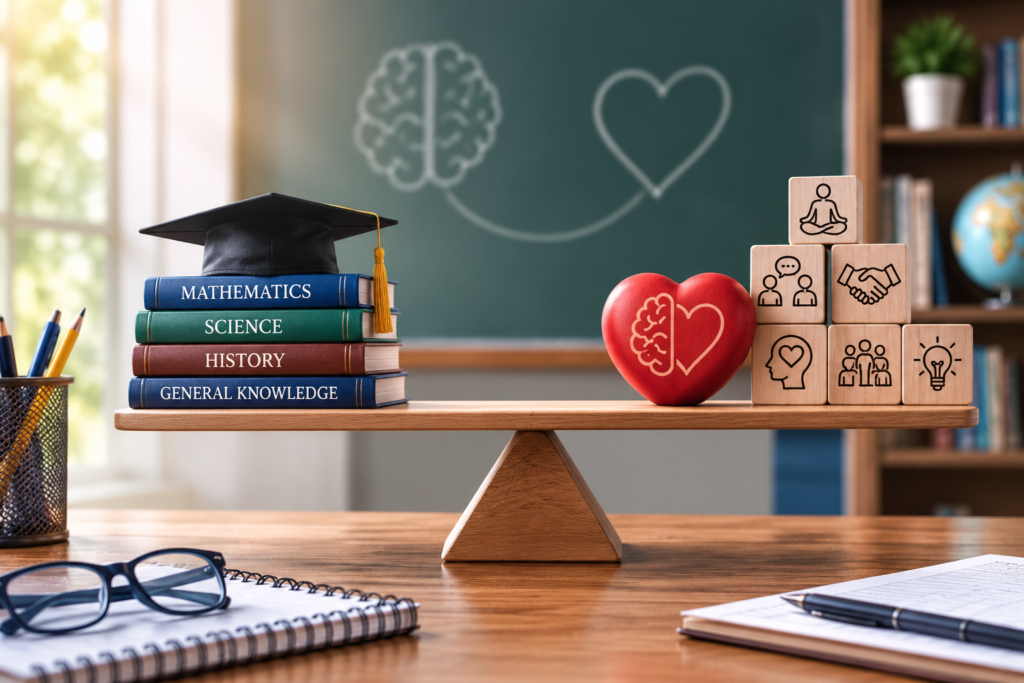
Academic performance has traditionally been one of the main measures of student success. Marks, examination results, and classroom performance help parents understand how well a child is progressing academically. However, academic ability is only one part of a student’s development.
A teenager also needs to understand emotions, communicate effectively, handle setbacks, build relationships, and make thoughtful decisions. These abilities are connected to emotional intelligence (EQ), and they can influence how successfully a student applies academic knowledge in real-life situations.
For parents evaluating a military school in Maharashtra or any other school, looking at emotional development alongside academics can provide a more complete picture of the education a child receives.
What Is Emotional Intelligence?
Emotional intelligence is the ability to recognise, understand, and manage one’s own emotions while also understanding the feelings of others.
For students, this can involve:
- Managing frustration after poor results
- Staying calm during disagreements
- Understanding how others feel
- Accepting constructive feedback
- Communicating concerns appropriately
- Building healthy relationships
- Making thoughtful decisions
These are not abstract adult skills. Teenagers encounter situations every day where emotional awareness can influence how they study, interact with classmates, respond to teachers, and deal with challenges.
Academic Intelligence and Emotional Intelligence Work Together
Academic intelligence helps students understand concepts, solve problems, remember information, and perform examinations. Emotional intelligence helps them manage the situations surrounding that learning.
For example, a student may understand a subject very well but lose confidence after receiving lower marks than expected. Another student may struggle initially but remain calm, seek help, learn from mistakes, and improve over time.
The second student demonstrates an important quality: resilience.
This is why a good school should not treat academic performance and emotional development as competing priorities. Both contribute to a student’s long-term growth.
Emotional Intelligence Helps Students Handle Failure
Failure is a normal part of education.
Students may receive lower marks, lose a sports competition, struggle with a subject, or experience disagreements with friends. The ability to respond constructively to these situations can make a significant difference.
Emotionally aware students gradually learn to ask:
What went wrong? What can I improve? What should I try next?
Instead of seeing a setback as proof that they cannot succeed, they learn to treat it as feedback.
This mindset becomes valuable during board examinations, competitive examinations, higher education, and professional life.
Communication Is More Than Speaking
Strong communication involves listening as much as speaking.
Students with better emotional awareness can learn to recognise when someone needs support, understand different viewpoints, and express disagreement respectfully.
Schools can encourage these abilities through:
- Group discussions
- Debates
- Team projects
- Sports
- Cultural activities
- Classroom presentations
- Peer interaction
These experiences create opportunities for students to practise communication in situations that cannot always be replicated through textbooks.
Emotional Intelligence Improves Teamwork
Students rarely work completely alone.
From classroom assignments to sports teams and school events, they regularly need to cooperate with others. Different personalities, opinions, and working styles can sometimes create disagreements.
Emotional intelligence helps students understand that effective teamwork requires patience, listening, compromise, and responsibility.
This is particularly relevant in structured environments such as military residential schools in Maharashtra, where students may spend significant time learning and participating in activities with their peers.
How School Activities Build Emotional Intelligence
Emotional intelligence does not necessarily need to be taught as a separate subject.
It can develop through everyday experiences.
A student who captains a sports team learns to motivate teammates. A student participating in a group project learns to listen to different ideas. A student responsible for an event learns how to manage pressure and coordinate with others.
Residential education can provide additional opportunities. Life in a military hostel, for example, requires students to interact with peers, follow shared routines, handle responsibilities, and adapt to situations away from home.
These experiences can contribute to emotional maturity when supported by appropriate guidance.
Teachers Play an Important Role
Teachers influence emotional development through the way they respond to students.
A supportive teacher can help students understand that making mistakes is part of learning. Constructive feedback can encourage students to improve rather than feel discouraged.
Teachers can also identify when a student is struggling with confidence, peer relationships, classroom participation, or academic pressure and provide appropriate guidance.
This is one reason parents should consider teacher-student relationships when evaluating a school rather than looking only at infrastructure and examination results.
Emotional Intelligence Supports Leadership
Leadership is not simply about giving instructions.
A good leader needs to understand people, communicate clearly, remain composed under pressure, and accept responsibility.
Students who develop emotional intelligence early can become better equipped to handle leadership opportunities later.
Whether they eventually enter defence services, higher education, business, technology, medicine, or another profession, these interpersonal abilities remain useful.
For students interested in defence careers, emotional maturity can complement preparation for opportunities such as NDA after 10th, the NDA exam, and other competitive pathways.
Why Emotional Intelligence Matters During Teenage Years
The teenage years bring major academic, social, and personal changes. Students become more independent while simultaneously facing increased expectations.
They may experience:
- Examination pressure
- Peer influence
- Changing friendships
- Competition
- Uncertainty about careers
- Increased responsibilities
A strong educational environment can help teenagers navigate these changes while developing greater self-awareness.
This is particularly important for students in residential settings, where learning to manage emotions and relationships becomes part of everyday life.
What Parents Should Look for in a School
Parents do not need to choose between academic excellence and emotional development.
Instead, they should look for schools that provide both.
Important indicators include:
- Supportive teachers
- Healthy peer interaction
- Sports and extracurricular activities
- Counselling or student support
- Team-based learning
- Leadership opportunities
- A respectful school culture
- Opportunities for independent responsibility
Parents exploring the best schools in Maharashtra for NDA should also consider whether the school’s overall environment helps students develop confidence, resilience, communication, and responsibility alongside academic preparation.
Emotional Intelligence Prepares Students for Life
Marks can open doors, but what students do after those doors open depends on many other abilities.
A student may need to work with different people, manage pressure, adapt to unexpected situations, communicate ideas, and recover from setbacks. These are areas where emotional intelligence becomes particularly valuable.
Academic intelligence helps students acquire knowledge. Emotional intelligence helps them use that knowledge effectively in real-world situations.
The strongest educational approach therefore develops both.
Conclusion
Emotional intelligence is not a replacement for academic intelligence. It is a complement to it. Students need knowledge to succeed academically, but they also need self-awareness, resilience, communication, empathy, and emotional control to navigate school, higher education, careers, and relationships successfully.
A well-rounded school environment gives students opportunities to develop these qualities through classroom interaction, sports, teamwork, responsibilities, and everyday experiences.
At Trimurti Pawan Pratishthan, education extends beyond examination preparation. Alongside academics, students are encouraged to develop discipline, confidence, teamwork, responsibility, and personal maturity – qualities that can support them throughout their educational journey and future careers.
FAQ’s
1. Why is emotional intelligence important for school students?
Emotional intelligence helps students manage emotions, handle setbacks, communicate effectively, and build positive relationships. A structured military school in Maharashtra can support these qualities through academics, sports, teamwork, and responsibility-based activities.
2. Can emotional intelligence improve academic performance?
Yes, emotional intelligence can support better learning by helping students manage stress, respond positively to feedback, remain motivated, and recover from academic setbacks. Students in military residential schools in Maharashtra may benefit from structured routines that encourage both academic consistency and personal responsibility.
3. How does hostel life develop emotional maturity?
Residential education gives students opportunities to manage responsibilities, interact with different personalities, and adapt to shared routines. A well-managed military hostel can therefore contribute to independence, communication, cooperation, and emotional maturity.
4. Is emotional intelligence useful for students preparing for the NDA exam?
Yes. Students preparing for the NDA exam need more than academic knowledge. Confidence, communication, teamwork, adaptability, and the ability to handle pressure are valuable qualities for future defence-oriented careers. Students beginning NDA after 10th can develop these qualities alongside their academic preparation.
5. How can schools help students develop emotional intelligence?
Schools can encourage emotional intelligence through sports, group projects, debates, leadership activities, peer interaction, mentoring, and supportive teacher-student relationships. A military boarding school in Maharashtra can incorporate these experiences into both academic and residential life.
6. Why should parents consider emotional development when choosing a school?
Academic results are important, but students also need confidence, resilience, communication skills, and the ability to manage challenges. Parents considering the best schools in Maharashtra for NDA should therefore evaluate whether the school supports holistic development alongside examination preparation.