

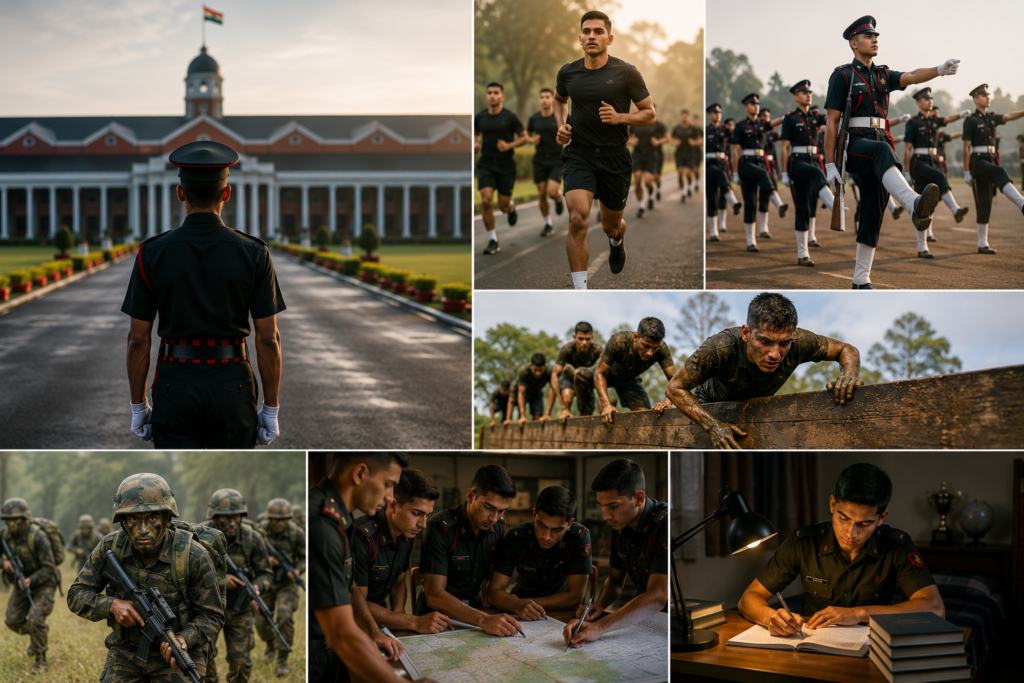
For many defence aspirants, joining the Indian Military Academy (IMA) is a dream that represents honor, discipline, leadership, and service to the nation. The academy has produced some of India’s finest military officers and continues to shape young aspirants into capable leaders ready to serve in challenging environments.
However, first-time aspirants often have many questions: What really happens during training? How difficult is it? What should students expect?
Understanding the reality of Indian Military Academy training can help aspirants prepare mentally and physically for the journey ahead.
What Is the Indian Military Academy?
The Indian Military Academy is one of India’s premier officer training institutions where selected candidates undergo rigorous military training before becoming commissioned officers in the Indian Army.
Training at IMA is designed to transform ordinary young aspirants into disciplined officers capable of leading troops, making decisions under pressure, and handling real-world military responsibilities.
The focus is not only on physical strength but also on leadership, mental resilience, strategic thinking, and character building.
The Daily Routine Is Highly Disciplined
One of the first things aspirants notice about military training is the disciplined daily schedule.
A typical day often starts before sunrise and follows a structured routine involving:
- Physical training
- Parade drills
- Academic sessions
- Tactical exercises
- Sports and endurance activities
- Leadership development
The routine may feel demanding at first, especially for students coming from a regular academic environment, but discipline gradually becomes a way of life.
Physical Training Is Intense
Physical fitness is a core part of training at IMA. Aspirants are pushed beyond their comfort zones to build endurance, stamina, and mental toughness.
Training may include:
- Long-distance running
- Obstacle courses
- Strength drills
- Endurance marches
- Combat fitness exercises
Many first-time aspirants assume physical training is only about building muscles. In reality, it is about developing resilience, mental toughness, and the ability to perform under stress.
Mental Strength Matters as Much as Physical Strength
One of the biggest surprises for first-time aspirants is how mentally demanding training can be.
Military officers are expected to:
- Stay calm under pressure
- Make quick decisions
- Lead teams in difficult situations
- Solve problems logically
This is why training constantly challenges mental endurance along with physical fitness.
Students preparing through an Army Academy or defence-focused institution often benefit from early exposure to disciplined routines and leadership exercises.
Leadership Development Is a Major Focus
IMA training is heavily centered on leadership.
An officer is not just a soldier – they are responsible for guiding, motivating, and protecting their team. Training activities are designed to help aspirants develop officer-like qualities such as:
- Responsibility
- Confidence
- Decision-making
- Communication
- Team coordination
Leadership is developed through practical exercises, team challenges, and real-time problem-solving.
Teamwork Is Essential
Military success depends heavily on teamwork. No officer works alone.
During training, aspirants learn how to:
- Trust teammates
- Communicate effectively
- Support group objectives
- Lead without ego
First-time aspirants quickly understand that teamwork matters as much as individual performance.
Discipline Extends Beyond Training Grounds
At IMA, discipline is not limited to parade drills or physical training. It reflects in every aspect of daily life.
From uniform maintenance to punctuality and personal conduct, every small detail matters.
Students learn habits such as:
- Waking up on time
- Following schedules
- Respecting responsibilities
- Maintaining personal discipline
These habits eventually become part of their personality.
Common Challenges for First-Time Aspirants
The first few weeks can be difficult for many aspirants.
Common challenges include:
- Physical exhaustion
- Homesickness
- Strict routines
- Mental pressure
- Adapting to discipline
However, most candidates gradually adjust and become stronger with time.
The training is intentionally demanding because real military responsibilities require strong mental and physical endurance.
How Can Aspirants Prepare Early?
Students aspiring for defence careers can begin preparation early by focusing on:
- Daily discipline
- Physical fitness
- Confidence building
- Communication skills
- Leadership habits
Preparation before joining helps aspirants adapt faster to the demanding training environment.
Conclusion
In conclusion, Indian Military Academy training is a transformative journey that builds much more than physical strength. It shapes aspirants into disciplined, mentally strong, confident, and responsible leaders capable of serving the nation with honor. From physical drills and tactical learning to leadership development and teamwork, every part of training prepares candidates for real-world challenges.
At Trimurti Pawan Pratishthan, students receive structured guidance, disciplined preparation, and expert mentorship that help them build the mindset, fitness, and leadership qualities needed to succeed in defence careers and prepare for institutions like the Indian Military Academy.
FAQ’s
What is the Indian Military Academy and why is it important?
The Indian Military Academy (IMA) is one of India’s most prestigious officer training institutions where selected candidates undergo rigorous military preparation before joining the Indian Army as commissioned officers. It plays a crucial role in developing leadership, discipline, physical endurance, and decision-making abilities required for military service.
How difficult is Indian Military Academy training for first-time aspirants?
Indian Military Academy training is highly demanding for first-time aspirants because it combines intense physical training, mental conditioning, tactical learning, and strict discipline. Students from a structured Army Academy or defence-focused training environment often adapt more quickly to the demanding routine.
What kind of physical training happens at IMA?
Physical training at IMA includes running, endurance marches, obstacle courses, strength exercises, and combat fitness drills. These activities help aspirants build stamina, resilience, and mental toughness. Such training prepares candidates for real-world military challenges where physical fitness is essential.
Why is leadership important in Indian Military Academy training?
Leadership is one of the most important aspects of Indian Military Academy training because officers are expected to lead teams during high-pressure situations. Aspirants are trained to develop responsibility, confidence, communication skills, and decision-making abilities required for successful military leadership.
How can students prepare for Indian Military Academy training early?
Students can prepare early by focusing on daily discipline, physical fitness, confidence building, teamwork, and communication skills. Training at a reputed Army Academy or defence-oriented institution can help aspirants build the mindset and discipline needed for military life.
Can military schools help students prepare for IMA and defence careers?
Yes, a disciplined military school in Maharashtra or military training school in Ahmadnagar can provide a strong foundation for future defence careers. These institutions help students develop physical endurance, leadership qualities, discipline, and mental resilience, all of which are valuable for success in institutions like the Indian Military Academy.